

Most VAT failures happen before a return reaches HMRC. A business can submit a form on time and still struggle if it hasn't monitored taxable turnover, preserved digital links, checked reverse-charge treatment, or reserved cash for payment. HMRC's records show that the registration threshold rose from £35,000 in 1991 to £90,000 from 1 April 2024, but the trigger remains operationally strict: taxable turnover must be monitored on a rolling 12-month basis, not checked only at year-end. HMRC's VAT registration history explains why threshold tracking belongs in everyday bookkeeping.
This VAT compliance checklist is for startups approaching registration, established SMEs, CIS-linked contractors, landlords handling property transactions, e-commerce businesses and professional services firms. The workflow is practical: monitor liability, capture evidence, file accurately, reserve cash, review exceptions and keep an audit-ready record of decisions. Action Accountants Limited is one relevant option for businesses that need UK VAT, bookkeeping, compliance or construction-focused support.
The eight parts cover registration, Making Tax Digital, input VAT recovery, reverse charge, scheme selection, HMRC enquiries, bad debt adjustments, and cash-flow planning. Use the list as a control system rather than a quarterly form-filling exercise.
Table of Contents
- 1. VAT Registration and Threshold Management
- 2. VAT Returns, Making Tax Digital and Digital Record-Keeping
- 3. Input VAT Recovery and Claim Documentation
- 4. Reverse Charge and Cross-Border Transactions
- 5. VAT Scheme Selection and Optimisation
- 6. VAT Audit Preparation and HMRC Correspondence Management
- 7. Bad Debt Relief and VAT Adjustment Procedures
- 8. Quarterly VAT Planning and Cash Flow Forecasting
- 8-Point VAT Compliance Comparison
- Turn the Checklist Into a Monthly VAT Routine
1. VAT Registration and Threshold Management
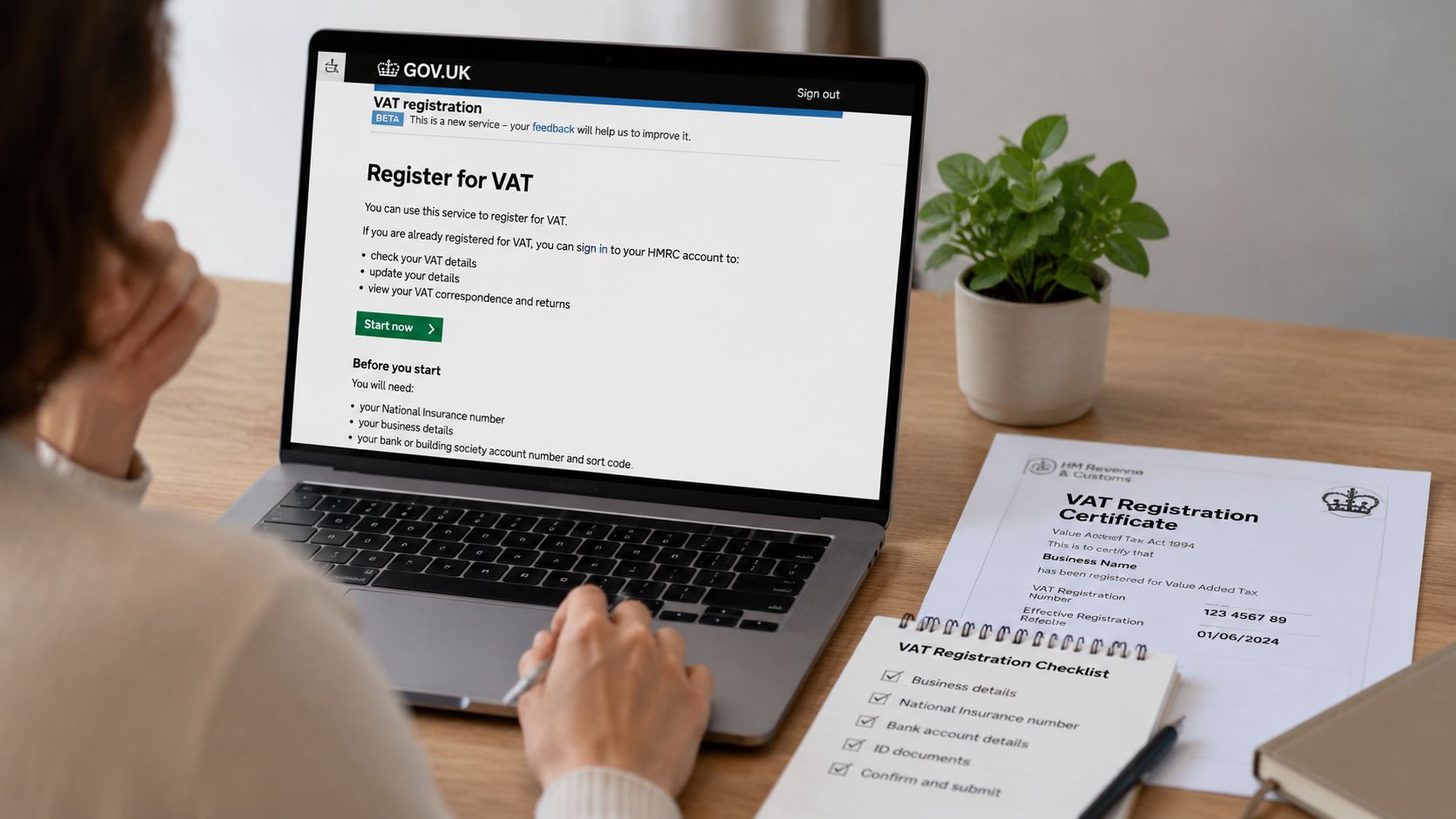
Registration starts with a calculation, not an assumption about business size. Track taxable turnover over every rolling 12-month period and record the date on which the threshold is exceeded. HMRC's published history records an annual limit of £35,000 in 1991, £54,000 by 2001, £73,000 in 2011, £85,000 in 2017, and £90,000 from 1 April 2024. The VAT Registration Manual confirms the importance of monitoring the threshold continuously.
A startup should add a VAT column to its monthly management pack from the first invoice. A construction contractor needs to distinguish taxable supplies from amounts that don't form part of its taxable turnover, while a property investor must examine whether particular rental or property transactions are taxable, exempt or outside the scope. Those classifications can require specialist advice, especially where residential and commercial property activities sit together.
Build a registration decision file
Keep a simple register showing the invoice date, customer, supply description, net value, VAT treatment and running rolling turnover. This gives the director or adviser an evidence trail when deciding whether mandatory registration applies or whether voluntary registration makes commercial sense.
Voluntary registration can support input tax recovery, but it also creates pricing, invoicing, return and record-keeping obligations. An e-commerce founder buying stock may value recovery, while a consumer-facing business may find that adding VAT affects its pricing position. Neither decision should be made from turnover alone.
- Set an owner: Assign one person to review the rolling figure every month.
- Record the effective date: Don't wait until the return process is ready.
- Update systems: Prepare invoice templates, customer communications and accounting codes before registration takes effect.
- Escalate property questions: Mixed-use property, land transactions and exempt rents need specialist review.
For a practical registration process, use this guide to check the UK VAT registration threshold. Keep the HMRC registration confirmation accessible, then verify that the VAT number, legal name and effective date appear correctly across invoices and software.
2. VAT Returns, Making Tax Digital and Digital Record-Keeping
A compliant return depends on the chain behind it. Sales invoices, purchase records, bank entries, adjustments and the submitted boxes should connect through compatible software and preserved digital links. HMRC's research records MTD VAT adoption rising from 72% before launch to 87% currently, which underlines the shift away from paper-led processes. HMRC's MTD for VAT research describes the digital-record and submission workflow.
Most businesses file quarterly, although some use different periods. Your software should calculate the return from source data, retain the underlying records and submit through an HMRC-approved service. Reconcile throughout the period rather than waiting for the quarter to close. A spreadsheet can help with analysis, but it shouldn't become the unlinked system used to calculate and submit the final return.
Use a pre-filing control
Two weeks before the deadline, close the review of sales, purchases, imports, credit notes and unusual journals. Compare the VAT report to the trial balance, bank reconciliation and aged receivables. Any manual adjustment needs a note explaining the reason, amount and supporting evidence.
Practical rule: A digital link isn't just an export button. You need to preserve a defensible route from the transaction record to the submitted return.
A startup implementing Xero, FreeAgent, QuickBooks or Sage from inception can establish consistent invoice numbering, permissions and document storage early. An established construction firm migrating from spreadsheets should map its old codes, test a complete return and keep the migration evidence. Bank feeds also need review. For example, autobankstatement integration with QuickBooks can support transaction capture, but automation doesn't replace VAT coding or approval.
Use this Making Tax Digital VAT compliance guide to review the software and workflow. Store digital invoices and supporting files securely, restrict record changes to authorised users and maintain backups. The compliance question isn't whether the team owns accounting software. It's whether the record-to-return process can be explained and reproduced.
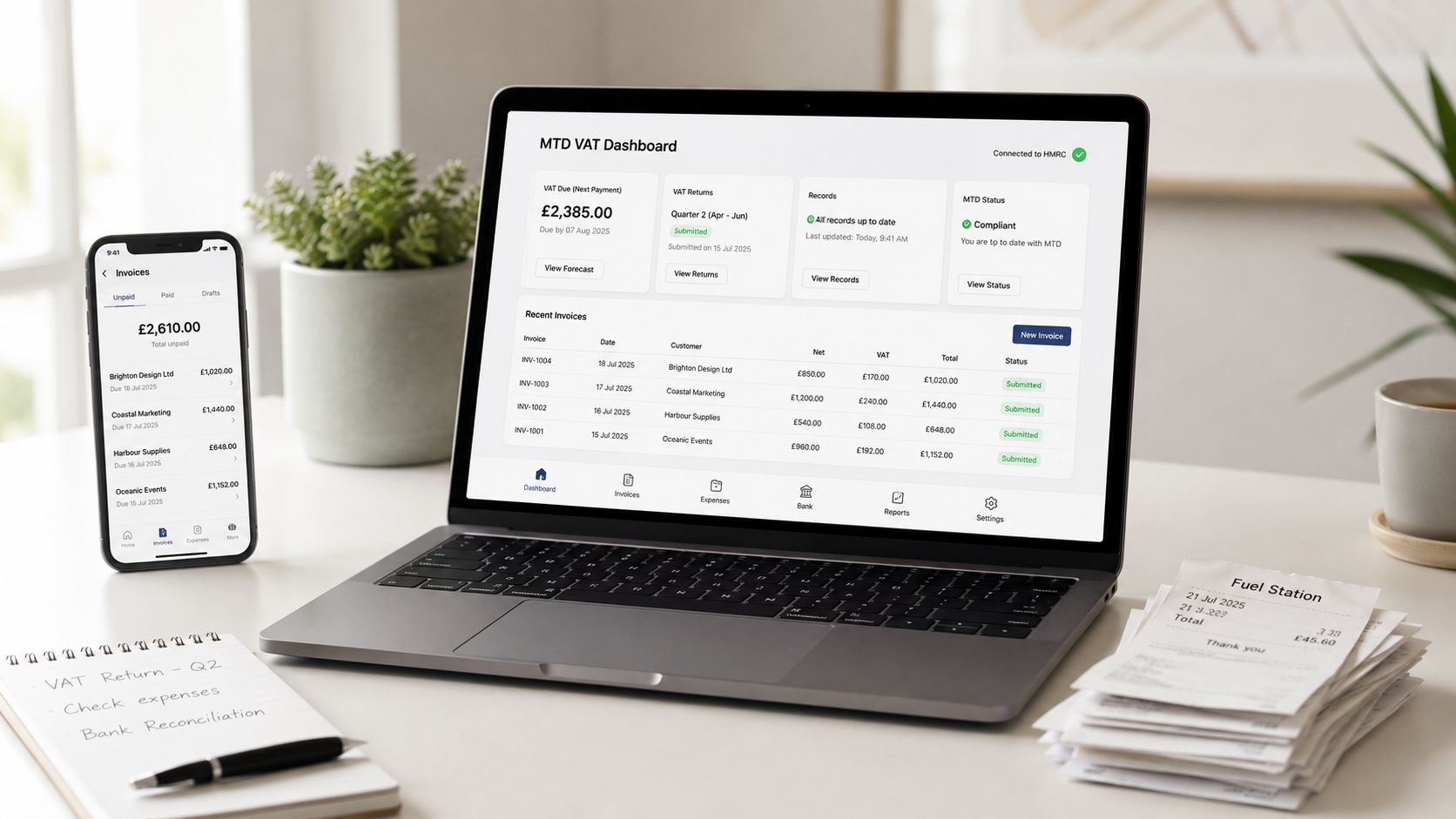
A short visual explanation can help staff understand the flow before they're asked to approve a return.
3. Input VAT Recovery and Claim Documentation
Input VAT recovery is where disciplined records turn into a legitimate cash benefit. The key question isn't whether a cost feels business-related. It's whether the business has the right evidence, the expense relates to taxable business activity, and any restriction or partial-use calculation has been handled correctly.
A London contractor may recover VAT on eligible materials, plant hire and professional services. A self-employed consultant may claim on software, office supplies and accountancy fees. A landlord or property developer needs more care because the treatment of maintenance, improvements, residential activity and commercial property can differ. Mixed-use expenditure should never be allocated by guesswork.
Make every claim traceable
Ask suppliers for valid VAT invoices and check the supplier name, VAT number, invoice date, description, net amount and VAT amount. Capture receipts as soon as they arrive, then code them as recoverable, restricted or requiring review. This is more reliable than asking the bookkeeper to interpret a crowded expense folder at quarter end.
- Check the supply: Confirm the cost supports taxable business activity.
- Check the evidence: Link the claim to a VAT invoice or acceptable supporting record.
- Check restrictions: Review entertainment, gifts, vehicles and private use separately.
- Check apportionment: Keep workings for mixed-use assets and shared costs.
- Check retention: Preserve documents so the claim can be defended if questioned.
Vehicle costs illustrate the trade-off. A vehicle used partly for private purposes may require a restriction, while a wholly business-use arrangement can have different consequences. Customer gifts, training, subscriptions and staff expenses also need transaction-specific analysis.
Use a document-management process such as Dext, formerly Receipt Bank, or Expensify if it fits the business. Automation helps collect evidence, but it won't decide whether a property cost is recoverable or whether personal use has been excluded. The guide to claiming VAT back can help structure that review before the return is approved.
4. Reverse Charge and Cross-Border Transactions
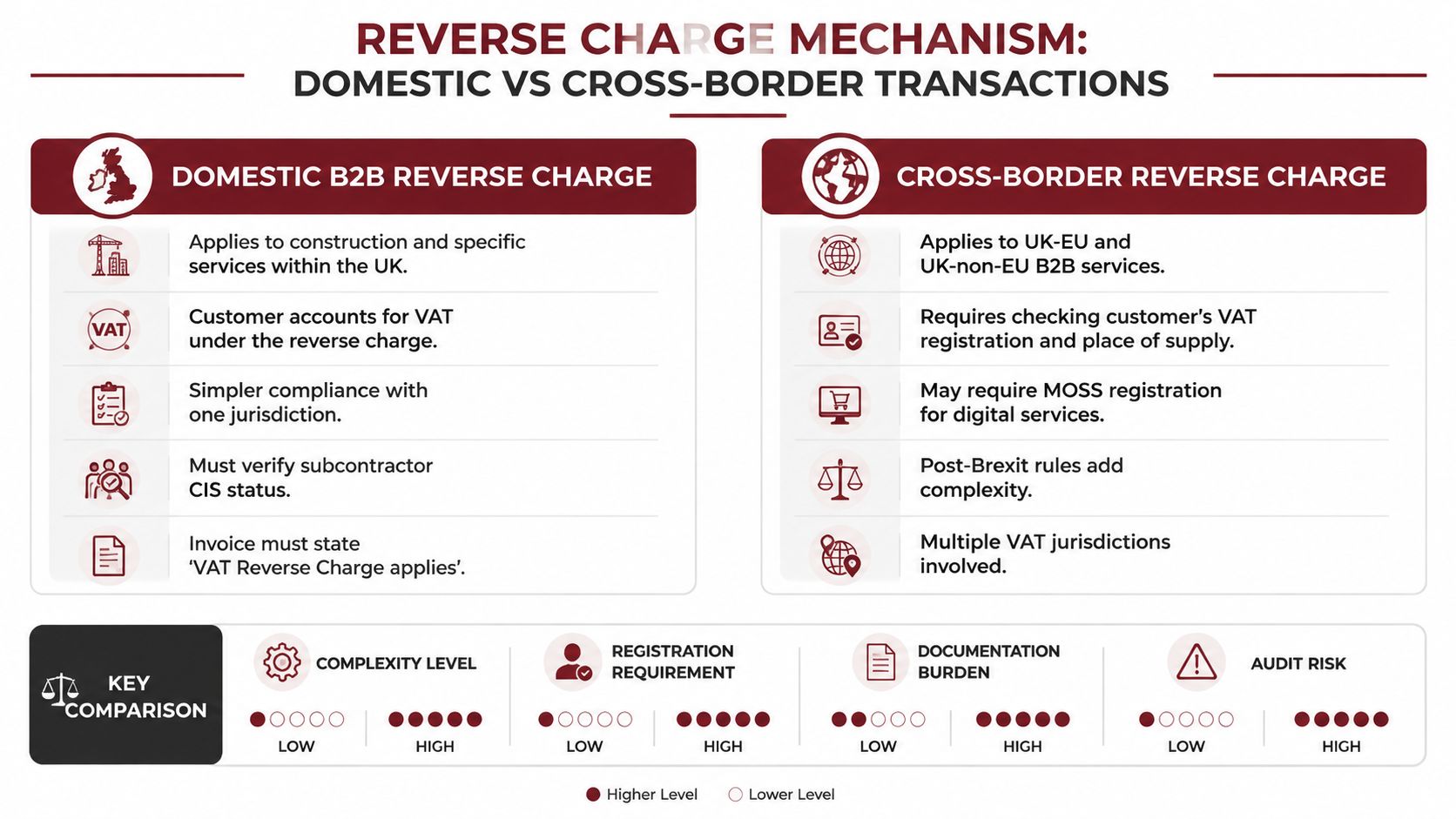
Reverse charge errors usually come from treating the invoice as an ordinary sale. Under a reverse-charge arrangement, the customer accounts for VAT rather than the supplier, but the correct treatment depends on the supply, customer status, place of supply and applicable rules. Contractors, design firms and professional services businesses should make this decision before issuing the invoice.
A UK construction business may need to assess the domestic construction reverse charge when supplying qualifying services to another VAT-registered business. A firm providing advice to an overseas business must examine place-of-supply rules and the customer's status. A digital-services seller also needs to distinguish business customers from consumers and establish where the customer belongs.
Use a transaction decision record
Create a short form or software workflow that records:
- Supply type: Describe the service precisely, not just “consultancy” or “works”.
- Customer status: Verify whether the customer is VAT registered where relevant.
- Customer location: Keep evidence supporting the place-of-supply conclusion.
- Invoice treatment: Apply the correct wording and VAT code.
- Return treatment: Confirm which boxes receive the transaction.
- Supporting evidence: Store contracts, VAT details and correspondence together.
A reverse-charge invoice is only the visible result. The defensible part is the evidence showing why the treatment applied.
Construction firms should align VAT coding with CIS records and subcontractor workflows. A mismatch between the contract, invoice and accounting code can create a correction later, even if the parties had the right commercial intention. Cross-border work deserves the same discipline. Brexit changed the practical questions for UK-EU transactions, so don't rely on an old invoice template or a customer's verbal description.
Review the VAT reverse charge explanation when building templates. For unusual supplies, land, digital services or uncertain customer status, obtain specialized advice before invoicing. Correcting a classification at source is easier than reconstructing the reasoning after several returns.
5. VAT Scheme Selection and Optimisation
The best VAT scheme is the one that fits the business's transaction profile, not the one that sounds simplest. Standard VAT offers detailed accounting for output and input tax. Cash Accounting can help a business that invoices customers who pay slowly, because cash timing becomes central to the calculation. Annual Accounting may reduce routine filing administration, while the Flat Rate Scheme trades detailed input recovery for a sector-based calculation.
That trade-off matters to contractors. A business with modest recoverable costs may value simpler administration, while a firm buying substantial plant, materials or professional services may prefer the recovery available under standard VAT. A professional practice with limited input tax has a different decision from a construction business with significant project expenditure.
Compare the real numbers before switching
Model expected liability using actual sales, expense categories, payment patterns and sector treatment. Don't choose a scheme because another business uses it. Check eligibility, exclusion rules, turnover requirements and the impact of capital purchases before notifying HMRC.
- Standard VAT: Usually provides the clearest transaction-level view and may suit businesses with meaningful recoverable input VAT.
- Cash Accounting: Can support cash management where customers pay after invoicing, but it requires reliable payment allocation.
- Annual Accounting: May reduce routine submission work, but it doesn't remove the need for accurate records or cash planning.
- Flat Rate Scheme: Can simplify calculations, yet non-recoverable input VAT and the applicable sector treatment can change the result.
Review the choice annually and whenever the business changes its income mix, customer base or spending pattern. A property business may need a separate assessment for margin or property-related rules. A contractor should verify that its sector classification and income streams are coded consistently.
Don't build the comparison from headline assumptions. Ask an adviser to model the liability and cash effect using the accounts, particularly before a scheme change, acquisition, major asset purchase or change in trading activity.
6. VAT Audit Preparation and HMRC Correspondence Management
HMRC audit readiness depends on daily controls, not last-minute document gathering. HMRC completed 316,000 compliance checks in 2024 to 2025 and protected £48.0 billion from non-compliance, according to its annual report and accounts. Clear evidence, consistent approvals and traceable records should therefore form part of the VAT process.
Store sales and purchase invoices, credit notes, import and export documents, contracts, bank reconciliations and VAT adjustments where another person can follow them. Organise folders or tags by period, supplier, transaction type and return. A file labelled “VAT stuff” makes a detailed HMRC query harder to answer.
Prepare an enquiry pack
For each return, retain the VAT report, ledger reconciliation, explanations for unusual movements and approval evidence. Construction businesses should connect the VAT file with CIS records, subcontractor verification and retention documentation. Property businesses need contracts, elections, purchase documents and calculations supporting mixed or special treatment.
Answer HMRC correspondence by the stated deadline. Keep copies of letters, emails and call notes, including dates and contact names. Check every explanation against the underlying records before sending it. For historic returns, significant recovery claims, property treatment or suspected fraud, obtain professional representation before responding.
HMRC enforcement also includes automated penalties and default surcharges. Its 2023-24 report records 7,197,643 automated penalties and default surcharges, alongside £41.8 billion in compliance yield, an increase of 23% year on year. The published HMRC report supports separating filing, payment and evidence checks into distinct approval points. If an adjustment involves bad debt relief, confirm the current statutory conditions with HMRC before changing a return.
7. Bad Debt Relief and VAT Adjustment Procedures
Unpaid invoices create two problems at once. The business loses the commercial receipt, while the VAT charged may already have been reported and paid. Bad debt relief can address the VAT element when the statutory conditions are met, but it isn't an automatic write-off entry.
Create an aged receivables review that identifies invoices approaching the relevant eligibility point. The file should show the supply, VAT charged, payment due date, amount outstanding, collection activity and accounting write-off. Keep emails, reminders, final notices and legal or debt-collection correspondence together.
Operate a bad-debt register
A useful register includes:
- Invoice reference: Match the debt to the sales ledger and VAT return.
- Customer details: Record the customer and related contract.
- VAT amount: Separate VAT from the gross commercial balance.
- Due date: Track the date from which the statutory waiting period is assessed.
- Collection history: Record reminders, calls and escalation.
- Claim status: Note whether the debt is under review, claimed or recovered.
The statutory conditions need careful checking. The supply must have taken place, VAT must have been charged, the consideration must meet the applicable requirement, and the required period must have elapsed without payment. The supplied plan identifies £600 and six months as important conditions, but businesses should confirm the current rules and their facts before adjusting a return.
Write the debt off in the accounts before claiming relief, then make the adjustment in the appropriate VAT return. If the customer later pays, reverse the relief and retain an explanation. Ongoing contractor relationships need particularly careful invoice-level tracking because a later payment, credit note or settlement can change the position.
8. Quarterly VAT Planning and Cash Flow Forecasting
A VAT return can be accurate and still cause a cash crisis. Output VAT arrives with customer invoices, but the cash may arrive later, while supplier payments, payroll, CIS deductions and project costs compete for the same working capital. Forecasting turns the expected VAT liability into a visible cash commitment.
Build the forecast into monthly management accounts. Start with expected taxable sales and eligible purchases, then adjust for payment timing, credit notes, capital spending, bad debts and unusual transactions. A contractor with seasonal project work should model the timing of materials and subcontractor costs, not just divide an annual expectation across quarters.
Link the forecast to decisions
Review the forecast before each period closes and compare it with the ledger. If actual sales or costs differ materially, update the expected payment and move cash into a separate reserve. The reserve isn't a substitute for accurate calculation. It's protection against customers paying later than expected or a large input claim being rejected.
- Review turnover: Compare actual taxable sales with the rolling registration tracker.
- Review recovery: Check whether large purchases are supported and correctly coded.
- Review timing: Identify invoices issued, paid or credited near the period boundary.
- Review exceptions: Escalate reverse charge, property and cross-border transactions.
- Review payment: Confirm the person responsible for approving and making the HMRC payment.
Timing capital purchases purely to create a VAT result can damage cash flow, so the commercial need should come first. Scheme selection should also be tested against the forecast, not judged only by administrative convenience. A growing startup should project its position forward far enough to identify when its current process or scheme stops fitting.
Use a structured compliance management system to assign owners, evidence and review dates if the business has multiple entities or delegated bookkeeping. The objective is simple: know what will be filed, what will be paid and which assumptions need professional review before the deadline.
8-Point VAT Compliance Comparison
| Item | 🔄 Implementation complexity | ⚡ Resource requirements | 📊 Expected outcomes | Ideal use cases | ⭐ Key advantages |
|---|---|---|---|---|---|
| VAT Registration and Threshold Management | Moderate, eligibility decisions and registration steps | Low–Moderate, HMRC portal access, advisor time | 📊 Legal compliance; ability to reclaim input VAT; established VAT account | Businesses approaching £85k turnover; startups planning recovery of input tax | ⭐ Enables input VAT recovery; prevents penalties; improves credibility. 💡 Monitor turnover monthly |
| VAT Returns, Making Tax Digital (MTD) and Digital Record‑Keeping | High, ongoing quarterly filings, digital linking and reconciling | High, MTD‑certified software, training, backups, security controls | 📊 Accurate VAT position, real‑time visibility, reduced paper admin, audit trail | All VAT‑registered businesses, especially high‑volume or cloud adopters | ⭐ Improves accuracy and defensibility; automates submissions. 💡 Reconcile monthly; use certified software |
| Input VAT Recovery and Claim Documentation | Moderate–High, detailed eligibility and partial recovery rules | Moderate, document management system, supplier invoices, controls | 📊 Reduced net VAT cost; improved cash flow when input VAT is material | Construction, manufacturing, property development, high‑input sectors | ⭐ Lowers net VAT liability; recovers VAT on capital & revenue spend. 💡 Keep complete VAT invoices and categorize recoverable items |
| Reverse Charge Mechanism and Cross‑Border Transactions | High, complex rules, place‑of‑supply and post‑Brexit nuances | Moderate, specialist knowledge, customer VAT verification, invoicing controls | 📊 Correct reporting; prevents double taxation; shifts VAT liability to customer | B2B cross‑border services, construction subcontracting, digital EU supplies | ⭐ Prevents VAT evasion and simplifies supplier obligations. 💡 State "VAT Reverse Charge applies" on invoices |
| VAT Scheme Selection and Optimization | Moderate, requires modelling and eligibility checks | Moderate, analysis time, calculators/software, possible HMRC notifications | 📊 Optimised VAT liability and reduced admin where scheme‑appropriate | SMEs, low‑input businesses (FRS), cashflow‑sensitive firms (Cash or Annual Accounting) | ⭐ Can reduce VAT cost and admin burden when matched to profile. 💡 Model annually with real figures |
| VAT Audit Preparation and HMRC Correspondence Management | High, audit triggers, strict timelines, legal exposure | High, organised archives, advisor/representation costs, staff time | 📊 Faster resolution of enquiries; lower penalty risk when prepared | Businesses with high input recovery, late filings, construction sector | ⭐ Protects against assessments and penalties; strengthens defence. 💡 Keep 6+ years of records and document correspondence |
| Bad Debt Relief and VAT Adjustment Procedures | Moderate, strict HMRC criteria and timing rules | Low–Moderate, records of collection efforts, accounting adjustments | 📊 Recovery of VAT on written‑off invoices once criteria met; possible reversals if paid later | Businesses with unpaid invoices ≥£600 and 6+ months overdue | ⭐ Recovers VAT on irrecoverable sales; improves cash flow post‑claim. 💡 Maintain a Bad Debt Register with collection evidence |
| Quarterly VAT Planning and Cash Flow Forecasting | Moderate, requires reliable projections and scenario modelling | Moderate, accounting integration, forecasting tools, management time | 📊 Predictable VAT payments; fewer cashflow surprises; strategic timing opportunities | Seasonal/volatile businesses and growing firms nearing thresholds | ⭐ Prevents cashflow crises and identifies planning opportunities. 💡 Keep a contingency reserve ~25% of quarterly VAT payable |
Turn the Checklist Into a Monthly VAT Routine
A VAT compliance checklist works when it becomes part of the operating rhythm. Each month, review rolling taxable turnover, aged receivables, unpaid supplier invoices, unusual sales, credit notes, property activity and cross-border transactions. Capture documents as they arrive, reconcile bank and ledger data, and investigate exceptions while the transaction is still easy to understand.
Before every return, assign four approvals. One person should confirm the data is complete. Another should review VAT rates, input recovery, reverse-charge coding and adjustments. The owner or director should compare the return with management accounts and the cash forecast. Finally, someone should confirm both the submission and payment arrangements.
The control system should reflect the business. A startup needs a threshold tracker, a compliant software setup and invoice controls from its first trading activity. An established SME may need permissions, audit trails and a documented month-end close. Contractors need CIS-aware workflows, subcontractor evidence and close attention to construction reverse charge. Landlords and property investors need records that separate residential, commercial, exempt and taxable activity.
Use practical templates
Create short working documents rather than an oversized manual:
- Threshold tracker: Rolling taxable turnover, classification and registration decision.
- Invoice review: Customer status, VAT rate, reverse-charge treatment and evidence.
- Digital-record review: Software, links, backups, access rights and reconciliation.
- Recovery schedule: Expense category, VAT invoice, business purpose and restrictions.
- Bad-debt register: Due date, collection activity, write-off and adjustment status.
- Audit file index: Return, reports, reconciliations, journals and correspondence.
HMRC's stricter regime makes timeliness part of compliance. Since January 2023, the points-based VAT penalty system has affected around 2.4 million VAT-registered businesses. HMRC states that a late return normally earns a penalty point, and reaching the relevant threshold can result in a £200 penalty, with another £200 for each later late submission while the business remains at that threshold. HMRC's penalty reform research explains why deadline ownership and exception escalation belong in the checklist.
Payment needs its own control. Recent reporting records 582,000 late-payment penalties issued in the year to 31 July 2025, totalling £302 million, with the current ladder applying 3% at 16 days overdue and another 3% at 31 days. The reported VAT enforcement figures make the practical response clear: submit early where possible, forecast the liability and confirm payment separately.
Don't postpone review if historic returns are wrong, a registration date is uncertain, a property transaction has mixed treatment, a cross-border supply is unclear or a construction reverse-charge decision is disputed. Action Accountants Limited can help businesses across North West London and the UK review VAT processes, bookkeeping, compliance evidence and sector-specific issues before they become expensive remedial work.
Action Accountants Limited provides VAT registration, bookkeeping, Making Tax Digital support, return preparation, compliance reviews and construction-aware accounting for UK businesses. Visit Action Accountants Limited to discuss a practical VAT control system for your startup, SME, contracting business or property activity.