
Claim VAT Back: Your Essential UK Guide
Action Accountants •2 June 2026
You're probably here for one of two reasons. Either you've started spending real money in the business and you want to know what VAT you can recover, or you've just seen VAT come off your cash balance and realised it's too large to ignore.
That's the right instinct. For a new business owner, a contractor, a landlord, or a startup founder, learning how to claim VAT back isn't just a compliance task. It's part of cash-flow management. Done properly, it puts money back into the business. Done badly, it leads to delayed repayments, blocked claims, and awkward HMRC questions.
The good news is that the process is usually straightforward once you know the rules, the paperwork, and the common traps.
Table of Contents
- Understanding Your Eligibility to Claim VAT Back
- The Core Process for Reclaiming VAT on Your Return
- Advanced VAT Rules for Special Situations
- Practical Examples for Contractors, Landlords, and Startups
- Managing HMRC Repayments and Potential Audits
- Common VAT Reclaim Questions Answered
Understanding Your Eligibility to Claim VAT Back
VAT has been part of the UK tax system since 1 April 1973, and by the 2024-25 tax year the VAT registration threshold reached £90,000 in taxable turnover, which is why growing businesses need to watch VAT closely as they scale (European Commission VAT refund report).
For most new owners, eligibility comes down to two questions. Are you VAT-registered? And are you buying goods or services for a business that makes taxable supplies? If the answer to both is yes, you can usually recover VAT on qualifying business costs.
Who can claim VAT back
The principle is simple. You charge output VAT on your sales, and you suffer input VAT on your business purchases. Your VAT return nets the two off against each other.
That doesn't mean every purchase qualifies. It also doesn't mean every business should register immediately. Some businesses register because they've crossed the threshold. Others register voluntarily because reclaiming input VAT helps their margins or because their customers are themselves VAT-registered.
If you want a clearer view of registration points, thresholds, and practical obligations, this guide to VAT rules for UK businesses is a useful companion read.
Practical rule: You can't reclaim VAT just because you paid it. You reclaim it because the purchase belongs to a VAT-registered business and supports taxable business activity.
That point matters for founders who blur business and personal spending in the early months. HMRC looks at business purpose, not your intention after the fact.
What you can usually reclaim
Some costs are usually straightforward. Stock, software subscriptions, accountancy fees, tools, materials, office costs, and professional services often qualify if they're for the business and backed by proper VAT evidence.
Other costs need care. Mixed-use purchases, private use, exempt activities, and entertainment can restrict or block recovery. A lot of trouble starts when owners assume “business related” is enough on its own.
| Expense Type | Generally Reclaimable? | Key Conditions & Exceptions |
|---|---|---|
| Stock and resale purchases | Usually yes | Must be for taxable business activity and supported by a valid VAT invoice |
| Tools, equipment, software | Usually yes | Private use may restrict recovery |
| Professional fees | Usually yes | Must relate to the business, not personal matters |
| Travel and subsistence | Often partly | Evidence must be clear, and personal elements can cause restriction |
| Motor expenses | Sometimes | Depends on use and the specific cost involved |
| Business entertainment | Often no | This is a common area where businesses overclaim |
| Property costs | Depends | Recovery can differ sharply between commercial and residential activity |
A new owner's job is to build good habits early. Save the right documents, separate personal spending, and review categories before quarter end. That's more valuable than trying to reconstruct everything later from a bank feed.
If you're tightening spending controls at the same time, this piece on spending smart for long-term business growth fits well with a stronger VAT process.
The Core Process for Reclaiming VAT on Your Return
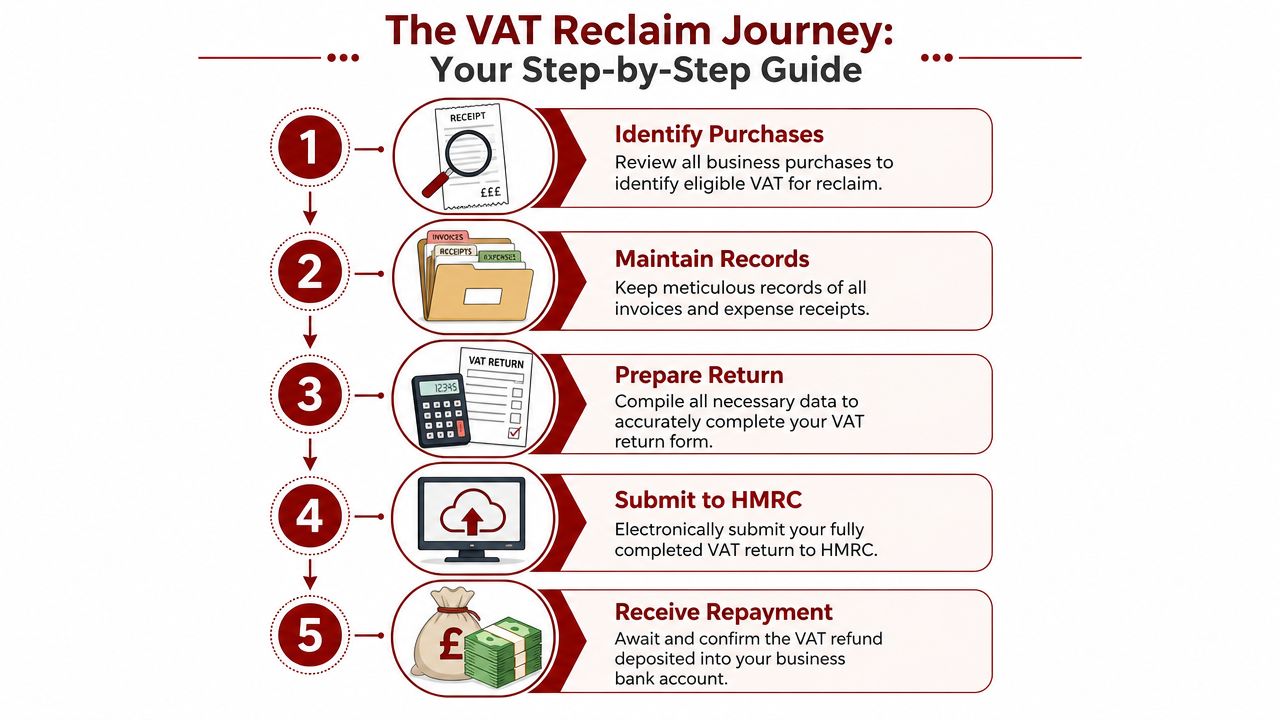
Once you know you're eligible, the reclaim process is operational. It lives or dies on records, coding, and timing.
Making Tax Digital for VAT became mandatory for most registered businesses in April 2019, and that changed the reclaim routine from paper-heavy admin to a digital record-keeping discipline that depends on software and a reliable audit trail (VAT4U on the move to digital VAT processes).
Start with evidence, not bank transactions
The first mistake I see is owners treating their bank statement as proof. It isn't. A payment shows money left the account. It does not prove the VAT treatment.
You need a valid VAT invoice or VAT receipt. If you process a lot of supplier bills, especially from trades, merchants, software vendors, or consultants, tools like an AI-powered VAT invoice extractor can help pull the key fields into a usable format before you review them properly.
A card slip, a delivery note, or a screenshot of payment usually won't carry the evidence you need for a reclaim.
A proper VAT document should show the supplier's VAT number, your business details, and the VAT amount. If any of that is missing, the reclaim becomes harder to defend.
Work out the return correctly
The standard workflow is consistent. Collect the invoices, identify input VAT on purchases, compare it with output VAT on sales, and post the figures to the return. The main figures feed into Boxes 1, 4, 6, and 7, and if Box 4 exceeds Box 1, HMRC owes a repayment (Howden guide to reclaiming VAT).
For a new business owner, the cleanest quarterly routine looks like this:
- Review purchase records and remove anything personal, duplicated, or unsupported.
- Check sales coding so output VAT has been captured correctly.
- Reconcile supplier balances against invoices, not guesses.
- Review exceptions such as deposits, credit notes, mixed-use costs, and unusual one-off purchases.
- Submit only after the digital trail is complete.
Shortcuts usually backfire. If you post costs from memory and “fix it next quarter”, the errors stack up.
File through digital records and software
Most VAT-registered businesses now file through MTD-compatible software. That means your bookkeeping system is no longer optional admin. It's part of the legal process.
Good software doesn't just submit the return. It gives you the evidence behind the return. That's the distinction that matters in a repayment case.
What works: reconciling every quarter from invoice level upward.
What doesn't: uploading receipts in bulk on the filing deadline and hoping the software sorts the VAT out for you.
For businesses with frequent supplier transactions, the best approach is boring and consistent. Capture documents as they arrive. Code them weekly. Review exceptions monthly. Then the quarter-end return becomes a final check, not a rescue job.
Advanced VAT Rules for Special Situations
Basic VAT recovery is manageable. Special situations are where good businesses start making avoidable errors.
These don't always show up in month one. They tend to appear when a business joins a scheme, buys a larger asset, carries a mix of taxable and exempt income, or tries to recover VAT in an area with its own industry quirks.
Flat Rate Scheme limits
If you're on the Flat Rate Scheme, you usually don't reclaim input VAT in the normal way on day-to-day expenses. That catches many owners out because they assume the standard purchase rules still apply.
The practical consequence is simple. Before claiming VAT back on a cost, check whether your scheme blocks normal recovery. The exception people often miss is that certain capital asset purchases may be treated differently.
A business on the Flat Rate Scheme needs a separate review mindset. Don't let your bookkeeper or software apply standard VAT recovery logic automatically without checking the scheme position first.
Partial exemption and mixed income
Partial exemption is where businesses get uncomfortable, because it sits in the grey area between “yes” and “no”. If your business makes both taxable and exempt supplies, you may not be able to recover all the VAT on shared costs.
Property businesses run into this often. So do firms with a mixed service model. The key issue isn't whether a cost is commercial. It's whether the cost supports taxable activity, exempt activity, or both.
A sensible working method is:
- Tag direct costs clearly so taxable and exempt items are separated at source.
- Identify overheads with mixed use such as utilities, software, insurance, or advisory costs.
- Apply a consistent apportionment method and keep notes explaining the basis.
- Review the position regularly because one change in income mix can alter recoverability.
If you're a contractor with a more complex structure, or your business model has evolved from simple trading into multiple streams, specialist support often saves time and disputes. That's especially true where contractor accounting support in London overlaps with VAT and operational record-keeping.
Capital assets and bad debts
Larger asset purchases deserve their own review. A van, a major equipment purchase, or a substantial fit-out can have VAT implications that are easy to mishandle if you treat them like ordinary overhead.
The same goes for bad debts. If you've accounted for VAT on a sale and the customer doesn't pay, relief may be available, but only if your records support the position and the debt has been handled properly.
Special VAT situations rarely fail because the business was dishonest. They fail because nobody stopped to ask whether the standard rule still applied.
When the transaction is unusual, the safest question is always the same. “What is different about this cost, this income stream, or this scheme compared with our normal VAT pattern?”
Practical Examples for Contractors, Landlords, and Startups
A VAT reclaim looks straightforward until it collides with how the business operates. A subcontractor is juggling CIS deductions and site purchases. A landlord is paying VAT on costs tied to exempt rental income. A startup is spending heavily before the first sale lands. The rules are the same. The pressure points are not.

Construction contractor with CIS pressures
Take Sarah, a subcontractor on commercial fit-out jobs. She is VAT-registered, buys materials from merchants, hires plant when needed, and has CIS deductions taken by the contractor paying her.
Her reclaim follows the normal VAT return process, but the risk sits in the paperwork rather than the calculation. Merchant invoices are usually acceptable. The weaker area is often fuel, tool purchases, and hurried site spending where the receipt is missing the supplier details or does not show VAT clearly.
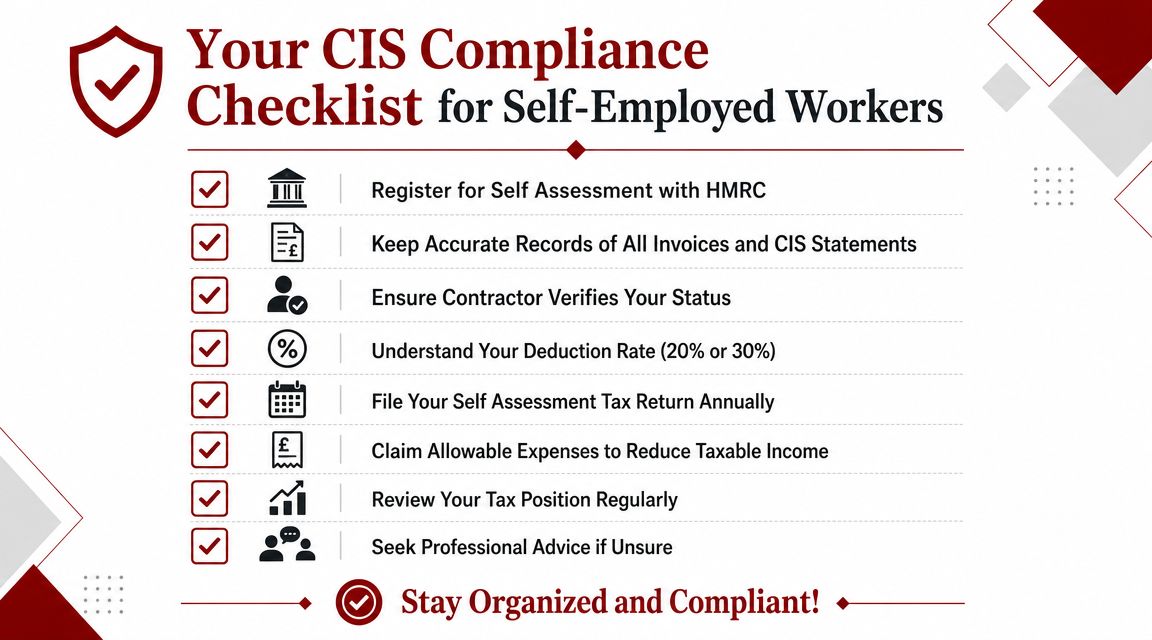
CIS causes regular confusion. It does not reduce or replace VAT. A CIS deduction is income tax withheld from payments for construction work. A VAT reclaim depends on whether the business holds valid purchase evidence and whether the cost relates to taxable activity. Those are separate checks, and mixing them up leads to avoidable errors.
For subcontractors trying to keep those systems apart, guidance on being CIS self-employed often solves just as many VAT problems as the return itself.
A simple example helps. If Sarah bills a contractor for labour and materials, charges VAT correctly, and then buys materials for that same job with valid VAT invoices, she can usually reclaim the input VAT on those purchases. If she tries to reclaim from card slips, supplier statements, or personal shopping receipts, HMRC is far more likely to query the return.
The cash flow point matters here. Contractors often wait on payment, absorb CIS deductions, and still need to fund materials up front. A clean VAT reclaim can ease that squeeze. A weak one creates the opposite problem and ties up money when the business needs it most.
Buy-to-let landlord with property costs
Now take Daniel, who owns residential buy-to-let property and pays for repairs, compliance work, and managing-agent fees. He sees VAT on invoices and assumes it must be reclaimable because the costs relate to the property business.
Property VAT becomes tricky in this situation. Residential letting is commonly an exempt activity, so input VAT on related costs is often not recoverable in the way a normal trading business owner expects. Paying VAT on the bill does not create an automatic right to claim it back.
That catches landlords out more often than it should. The expense feels commercial. The supplier charged VAT correctly. The landlord still cannot always recover it.
The practical test is what the cost supports. If the expense relates to exempt residential rental income, recovery may be blocked. If the landlord has a more mixed property position, such as different types of property activity or a separate taxable business, the analysis gets more detailed and records need to show which cost belongs where.
A sensible review usually splits costs into clear groups:
- Repairs and maintenance linked to ongoing rental activity
- Professional fees such as legal, tax, or accountancy costs
- Capital improvements that need separate treatment
- Mixed-use costs where private or non-business use may restrict recovery
For landlords, caution usually saves money in the long run. A wrong claim can trigger questions that spread beyond one invoice and into the wider property record.
Here's a short explainer that many founders find useful before they build their first process around examples like these:
Tech startup claiming pre-trading VAT
Now consider Priya, who spent months building a SaaS product before the company started billing customers. The business paid for laptops, software subscriptions, branding, legal setup, and outside development support before trading began.
For startups, this is often one of the most useful areas to review because the spending arrives before the revenue does. If the purchases were made for the business and the records are in order, pre-registration VAT can sometimes be reclaimed. That can make a real difference to early cash flow.
The practical problems are predictable. Founders use personal cards. Early invoices are addressed incorrectly. Some costs relate to testing ideas that never became part of the final business. HMRC will look for a clear business purpose and a clear link to the eventual VAT-registered activity.
The strongest claims usually have a tidy timeline. The company bought the item for future business use. The item or service fed into the taxable business. The invoice is valid. The records show who paid and why.
Startup habit that pays off: keep a separate folder for pre-trading costs with the invoice, payment proof, and a short note explaining how the item was used in the business.
I have seen this make the difference between a smooth reclaim and a long email chain trying to rebuild the story months later. Startups move fast, but VAT evidence still needs to be slow, boring, and complete.
Managing HMRC Repayments and Potential Audits
Submitting the VAT return is not the finish line. It's the point where HMRC decides whether the repayment flows normally or pauses for checks.
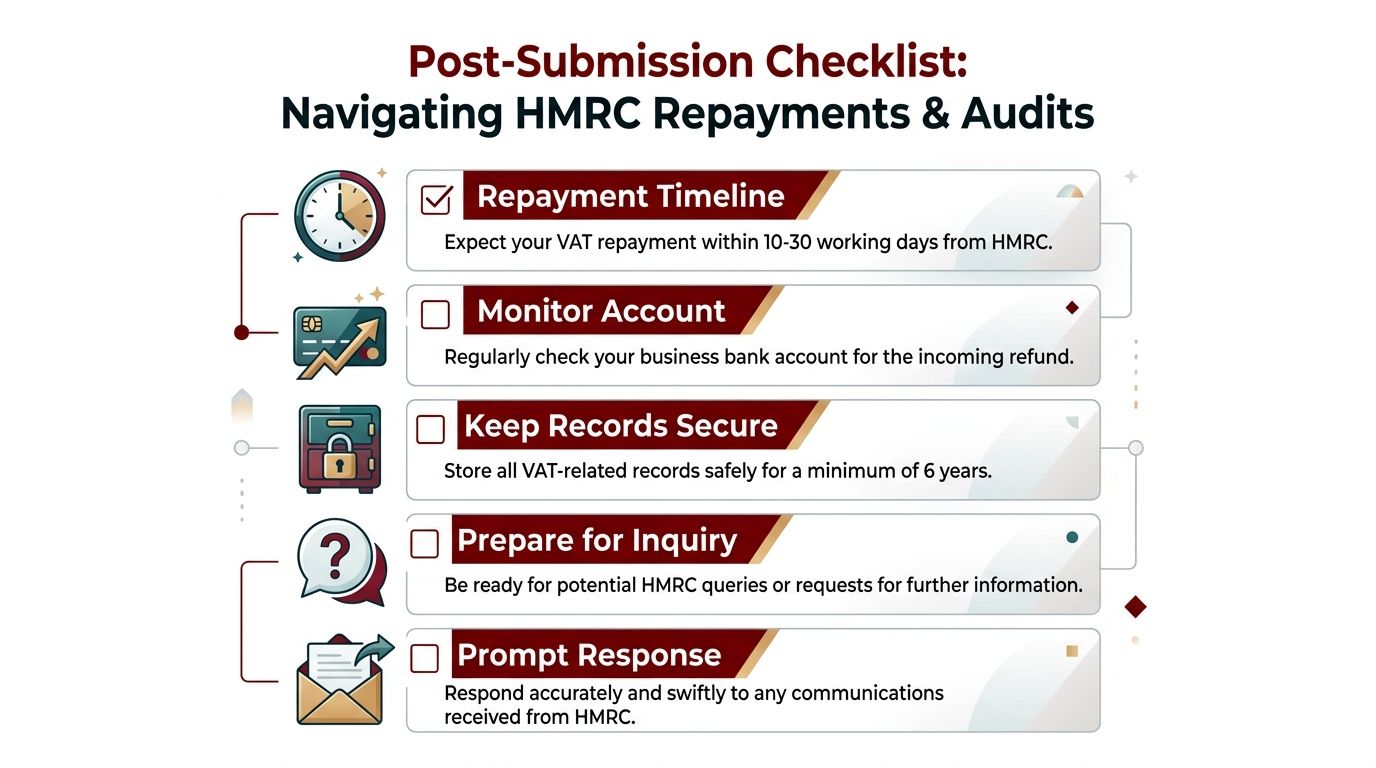
HMRC typically issues VAT repayments within 30 days of receiving the return, but delays often come from documentary failures such as incomplete receipts, mixed personal and business use, or weak supporting evidence for purchases (Swoop Funding on VAT repayment timing and common delays).
What happens after you submit
If your reclaim is routine and your records are clean, repayment often moves without drama. If the return is unusual, HMRC may ask questions before releasing funds.
Common triggers include a first large reclaim, a sudden spike in purchases, unusual ratios between sales and costs, or categories that often attract errors. That doesn't mean anything is wrong. It means your file needs to stand up on its own.
After submission, do these four things:
- Watch the business bank account so you notice the repayment or the absence of it.
- Keep the supporting file ready with invoices, explanations, and reconciliations.
- Review unusual items again before HMRC asks, especially mixed-use costs.
- Make sure someone reads HMRC post promptly so no query sits unanswered.
If your systems are still light-touch, stronger finance discipline usually improves more than VAT. It also reduces stress across payroll, bookkeeping, and year-end work. That broader point is well covered in this article on how an accountant can help a small business.
How to respond if HMRC asks questions
Don't panic. Most VAT checks are document-driven. HMRC wants to see how you arrived at the claim.
Reply with the records in a tidy format. Match each invoice to the ledger entry. Explain any apportionment clearly. If a cost is unusual, say why it belongs to the business.
When HMRC writes about a repayment return, speed matters less than clarity. A fast but messy response usually creates a second round of questions.
What doesn't work is sending a dump of receipts with no narrative. What does work is a short schedule, labelled invoices, and concise explanations.
Common VAT Reclaim Questions Answered
Can a sole trader claim VAT back
Yes, if the sole trader is VAT-registered and the purchases relate to taxable business activity.
Business structure doesn't control VAT recovery in the way many people think. A sole trader can reclaim input VAT just like a limited company can, provided the VAT registration and business-use conditions are met. What matters is not whether you trade through a company. It's whether the purchase belongs to a VAT-registered business and is backed by valid evidence.
Is business VAT recovery the same as tourist tax-free shopping
No. They are completely different.
A common point of confusion is personal shopping. In the UK, refunds are highly restricted. They are only available in limited cases for goods bought in Northern Ireland, taken out of the EU within 3 months, and supported by a VAT 407(NI) form, as explained in the official tax-free shopping rules on GOV.UK.
If you searched “claim VAT back” because you bought goods personally and expected a broad UK shopping refund, that's usually the wrong route. Business VAT recovery sits inside your VAT return. Tourist-style shopping refunds follow a separate and much narrower set of rules.
How far back can you claim VAT before registration
For startups, some pre-registration claims can be possible on earlier business purchases. The practical question is whether the item was bought for the business and is still connected to the taxable activity after registration.
For goods, the look-back can be significant, but the claim only works if the records are there and the business use is clear. Founders help themselves by preserving original invoices, supplier details, and a clear timeline of how the business launched.
If you've got a box of historic receipts and no schedule, sort them before the first return. Don't send an optimistic reclaim built on incomplete paperwork.
Can you reclaim VAT if you only have a card receipt
Usually, that's risky.
A card receipt proves payment. It usually doesn't prove the VAT detail HMRC expects. If the supplier can issue a proper VAT invoice or replacement receipt, get that before you file. For regular suppliers, this is worth fixing permanently so quarter-end doesn't become a chase exercise.
What if Box 4 is higher than Box 1
That usually means HMRC owes you a repayment, assuming the return and supporting records are correct.
This is common in periods where you've bought equipment, incurred setup costs, had a quiet sales quarter, or operate in a pattern where input VAT regularly exceeds output VAT. The key point is that repayment returns often receive more scrutiny, so your evidence should be stronger, not weaker, in those periods.
What's the biggest practical mistake new owners make
Mixing personal and business spending, then trying to tidy it up later.
The VAT system rewards separation and consistency. Use a business bank account. Ask for proper invoices at the time of purchase. Keep digital copies. Review transactions every week or every month, not every quarter in a rush. Most VAT reclaim problems don't start with complicated law. They start with weak habits.
If you want help reviewing your VAT setup, reclaim position, or record-keeping process, Action Accountants Limited can help you get it right without overcomplicating it. They support startups, contractors, landlords, and growing businesses with practical VAT, bookkeeping, CIS, and compliance advice that protects cash flow and keeps HMRC queries manageable.