

Accounting for Contractors Construction: UK Guide 2026
Action Accountants •12 June 2026
You finish a job. The client pays. The bank balance looks decent for a week or two. Then the supplier bills land, subcontractors need paying, retention is still sitting with the client, and suddenly nobody in the office can answer the one question that matters. Did that project make money?
That's the point where generic bookkeeping stops being enough. In construction, profit doesn't show up neatly in the month the cash arrives. Costs hit early, invoices follow staged valuations, tax rules sit on top of payroll and subcontractor payments, and one coding mistake can distort both margin and compliance. For many contractors around North West London, that's the gap between looking busy and being financially in control.
If you're searching for practical guidance on accounting for contractors construction, the priority isn't prettier reports. It's building a system that tells you three things quickly: what HMRC expects, what each job is earning, and how much cash is really available.
Table of Contents
- Why Your Construction Business Needs Specialist Accounting
- Mastering UK Compliance CIS and VAT Explained
- Tracking Profitability with Job Costing and Project Accounting
- Strategies for Better Cash Flow and Tax Efficiency
- The Right Bookkeeping Workflow and Software for Contractors
- Your Expert Accounting Partner in North West London
- Common Questions on Construction Accounting
Why Your Construction Business Needs Specialist Accounting
Construction firms don't trade in a simple buy-and-sell cycle. They price work before all costs are known, commit labour and materials before full payment arrives, and often run several live jobs at once. If you use the same accounting approach as a standard service business, you'll almost always spot problems too late.
A contractor can look profitable on paper and still be under pressure. Money may be tied up in unbilled work, disputed variations, retention, or supplier balances that fall due before the client certificate clears. Standard bookkeeping records transactions. Specialist construction accounting interprets them by project, contract stage, and tax treatment.
Why ordinary bookkeeping breaks down
The most common failure is lumping costs into broad overhead buckets. If materials, labour, plant hire, and subcontractor costs aren't tied to the right job, your accounts stop being a management tool and become a tax file only.
That creates practical problems:
- Pricing slips: You estimate the next tender using incomplete history.
- Margin gets masked: One poor job is hidden by cash from another.
- Tax coding errors spread: CIS, VAT treatment, and supplier postings get mixed together.
- Decisions get delayed: By the time month-end accounts show a problem, site has already moved on.
Practical rule: If you can't tell which live job is carrying the business this month, your accounting system is too generic for construction.
A lot of firms start fixing this by tightening internal records first, then looking at wider processes for streamlining business accounting. The principle is simple. Less manual rework means fewer posting errors and faster visibility.
What specialist accounting actually gives you
Specialist contractor accounting should give you a working view of the business, not just year-end compliance. At minimum, you need:
| Control area | What it should show |
|---|---|
| Job costing | What each project has cost so far |
| Revenue tracking | What's earned, billed, and still to bill |
| Cash monitoring | What's due in, what's due out, and when |
| Compliance controls | Whether CIS and VAT entries are correct |
| Management reporting | Which jobs are healthy, tight, or drifting |
If you want a broader view of how finance support helps small firms beyond year-end accounts, ways an accountant can help your small business is worth a read.
Mastering UK Compliance CIS and VAT Explained
For UK contractors, compliance isn't background admin. It sits in the middle of daily payment decisions. The two areas that cause the most confusion are CIS and VAT, especially when teams are busy and invoices are moving quickly.
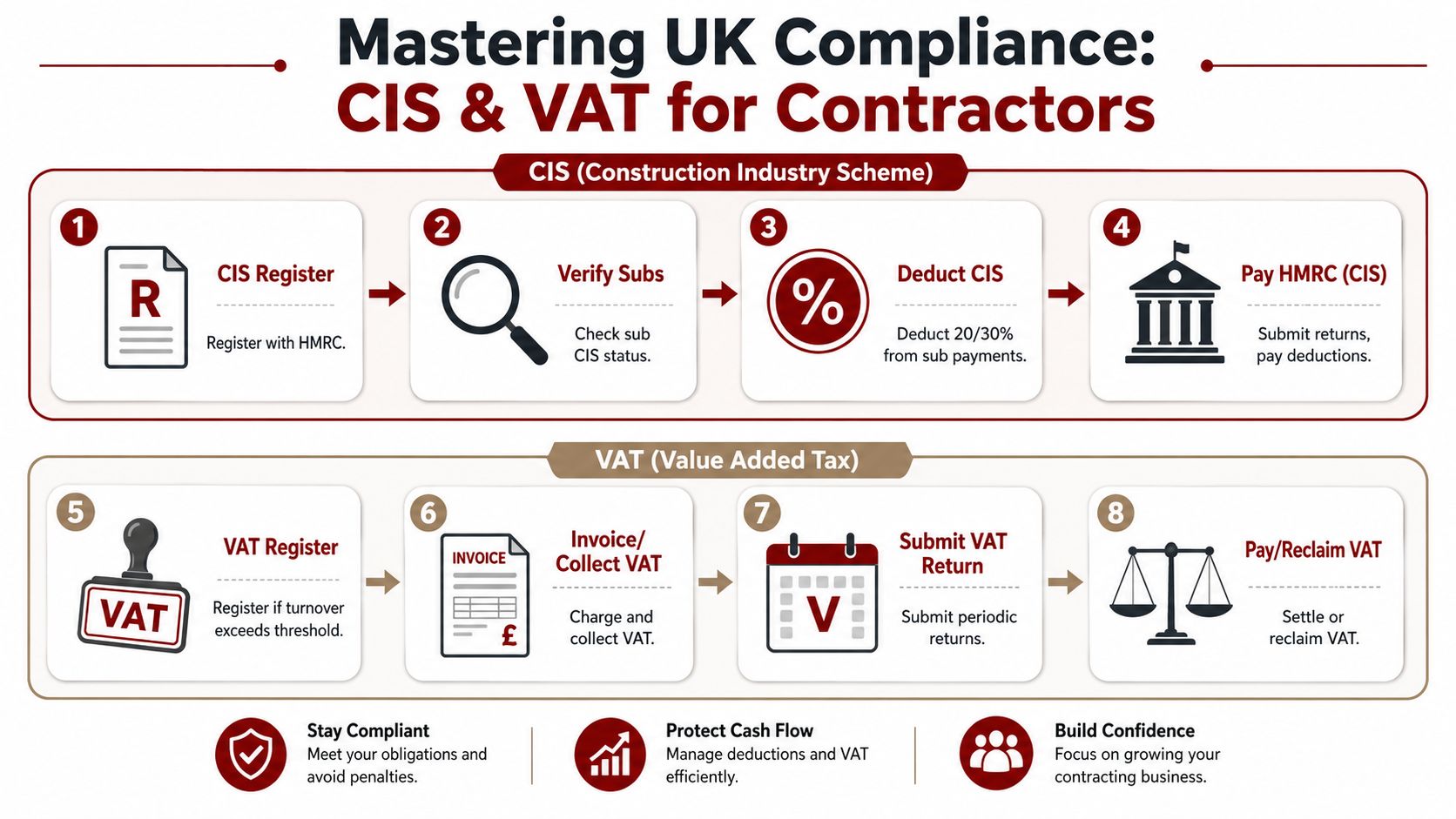
Think of CIS as a tax toll booth on subcontractor payments. Before cash goes out, you need to know who the subcontractor is, whether they're verified, what part of the invoice is labour, and what deduction applies. If that process is weak, the bookkeeping will be wrong before month-end even starts.
Getting CIS right from the start
A core UK rule is that HMRC's Construction Industry Scheme requires contractors to deduct 20% from payments to registered subcontractors and 30% from those not registered, with 0% only where gross-payment status applies, as outlined in the Construction Industry Scheme guidance cited here.
That sounds straightforward until real invoices arrive. Some include materials, some are labour only, some include VAT, and some are split badly. The deduction point matters because CIS is applied to the labour element after excluding VAT and certain materials. If your team posts the whole invoice as labour, the deduction will be wrong. If they miss the deduction entirely, you create a compliance problem and a payment problem in one go.
A practical process looks like this:
- Verify the subcontractor first. Don't wait until payment day.
- Check the invoice breakdown. Labour, materials, VAT, and any retention should be clearly separated.
- Apply the deduction correctly. The rate depends on status, not habit.
- Issue the payment and deduction statement. That keeps the subcontractor informed and your records consistent.
- Submit the monthly return on time. HMRC treats the reporting timetable as critical.
For subcontractors who need a straightforward view of how the scheme works in practice, CIS support for the self-employed covers the basics clearly.
Where VAT trips contractors up
VAT in construction often goes wrong because firms copy invoicing habits from other industries. That doesn't work well when construction services fall under sector-specific treatment, including the Domestic Reverse Charge in the right circumstances.
The accounting point is practical. The invoice has to reflect the correct VAT treatment from the outset. If your team raises a standard VAT invoice where reverse charge treatment should apply, you don't just create a technical error. You create reconciliation issues, client queries, and extra work later.
A simple site-to-ledger compliance routine
Use this as a weekly check:
- Subcontractor status confirmed: Keep the verification result on file.
- Invoice coding reviewed: Labour, materials, VAT, and retention must be split properly.
- Deduction posted correctly: The ledger should reflect gross cost, CIS withheld, and net payment.
- Returns diary maintained: Don't leave CIS filing to memory.
- VAT treatment checked before issue: Correcting a bad invoice after the client has processed it is always slower.
Bad compliance rarely starts with a complex tax issue. It usually starts with a rushed invoice, weak coding, or a payment run done without enough checking.
Tracking Profitability with Job Costing and Project Accounting
The bank balance doesn't tell you whether a project is profitable. It tells you what cash happens to be in the account today. Construction accounting needs a different lens. Each live contract should operate like its own financial file, with costs, billing, margin, and exposure tracked separately.
That's why job costing sits at the centre of accounting for contractors construction. Without it, you're relying on instinct, site updates, and rough memory of what was quoted.

What job costing needs to capture
For UK contractors, revenue recognition and job costing need to follow project stage rather than invoice timing, because long-term work often requires WIP measurement and percentage-of-completion style analysis so profit isn't overstated on unfinished jobs, as explained in this construction accounting overview.
In practice, each job should capture direct costs clearly enough that gross margin can be tested against what has been achieved on site. That usually means tracking:
- Materials booked to the correct project
- Labour by site, period, or activity
- Subcontractors with clean invoice splits and approvals
- Equipment and plant where the cost belongs to a specific contract
- Change orders and variations so extra work doesn't disappear into overhead
The mistake I see most often is businesses recording these items accurately enough for VAT, but not accurately enough for management. That isn't the same standard.
WIP, retention, and the profit illusion
A job can show strong billed revenue while still creating pressure. That happens when billing runs ahead or behind actual delivery, when retention is withheld, or when costs have been committed but not yet fully reflected.
A proper WIP report helps by comparing what has been earned with what has been billed. It gives management a cleaner view of whether the contract is ahead, behind, or drifting.
Here's the difference in plain terms:
| Item | What it tells you |
|---|---|
| Billed value | What you've invoiced so far |
| Cost to date | What the job has consumed so far |
| Retention | Money earned but not yet received |
| WIP position | Whether accounts reflect actual progress |
If a contractor reviews only sales invoices and supplier bills, they're managing paperwork. If they review WIP and job margin, they're managing the business.
Percentage of completion versus waiting until the end
For longer contracts, recognising performance as work progresses usually produces a more honest picture than waiting until completion. It aligns income with the stage of delivery and forces regular cost review.
That said, it only works if estimates are maintained. A stale budget makes every completion figure suspect. The accounting method doesn't rescue weak project controls.
What works in practice is disciplined review:
- Update estimated cost to complete when site conditions change.
- Test margin monthly against revised forecasts, not original optimism.
- Separate certified value from cash received because they are not the same thing.
- Flag underbilling early so project managers know when delivery is outrunning invoicing.
What contractors should review each month
A useful monthly job review isn't long. It's focused. For each live project, ask:
- What have we spent to date?
- What have we billed?
- What is certified but unpaid?
- What retention is outstanding?
- Has the forecast margin changed?
- Are there unapproved variations sitting in site emails rather than the accounts?
That last point matters. Variations often hold the difference between a decent job and a disappointing one. If they aren't recorded and chased properly, the accounts understate earned value and cash planning becomes weaker than it needs to be.
Strategies for Better Cash Flow and Tax Efficiency
Most contractors fail from cash pressure before they fail from lack of turnover. That's the hard truth. A profitable year on paper won't protect you if supplier terms are short, wages are due weekly, and client money arrives late or in stages.
The cash issue gets worse when accounting and tax timing pull in different directions. One source cited in the brief states that 35% of contractors face cash flow shortages due to misaligned CIS deductions and Percentage of Completion revenue timing, according to the UKCIF 2025 figure referenced here. Whether your firm feels that pressure mildly or sharply, the lesson is the same. Cash flow needs active management, not after-the-fact explanation.
What improves cash flow in practice
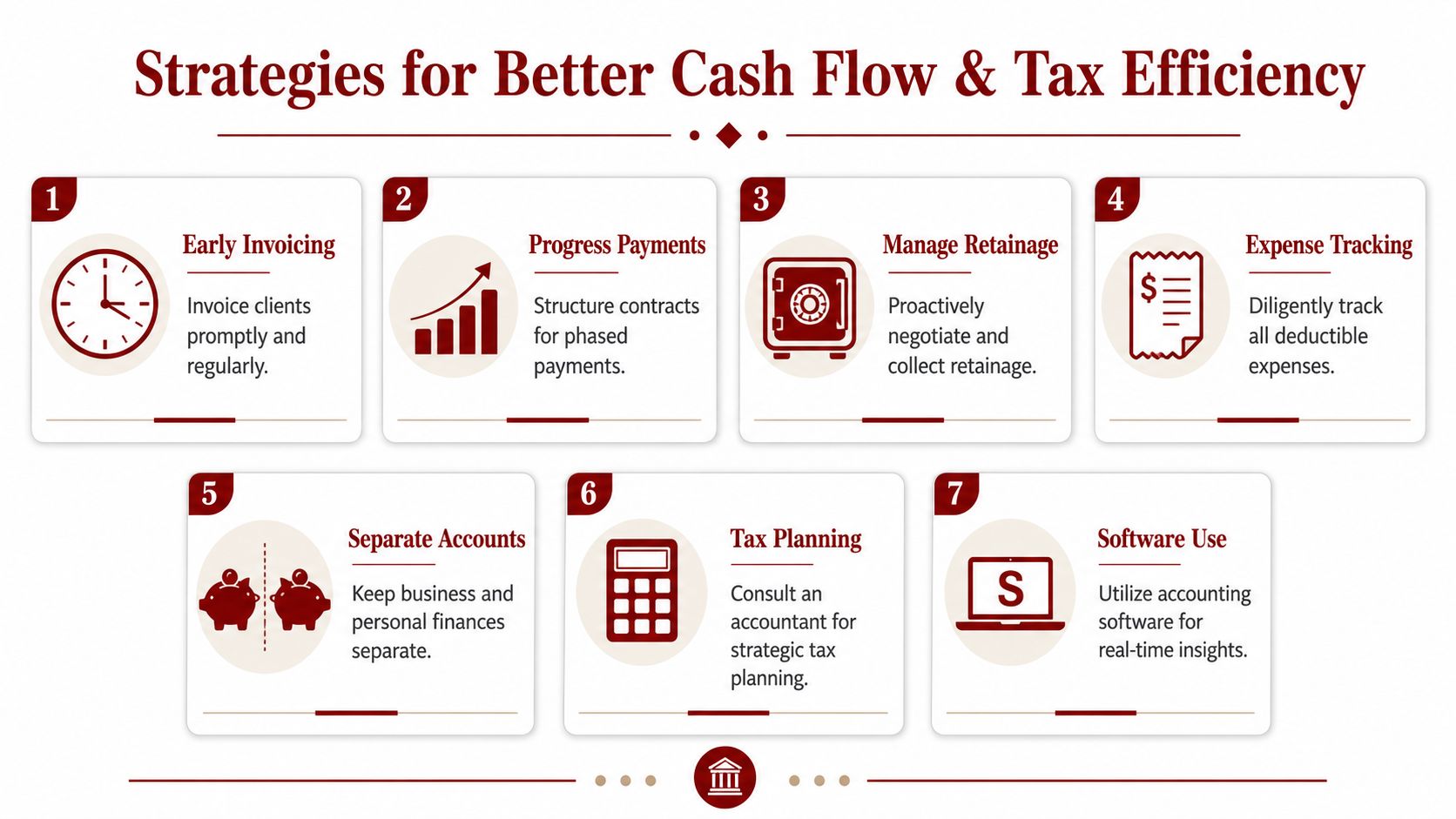
Not every tactic moves the needle. The strongest improvements usually come from tightening billing discipline and reducing avoidable delay between work completed and invoice issued.
Focus on the basics that change timing:
- Invoice as soon as the contract allows: Waiting until the end of the week, or worse the end of the month, turns admin delay into funding pressure.
- Use progress payments properly: If the contract supports staged billing, use it cleanly and consistently.
- Track retention separately: Don't leave it buried in debtor balances with no follow-up date.
- Review debtor notes weekly: Aged receivables without call notes are just old problems getting older.
- Match supplier terms to client terms where possible: Even small improvements in timing help.
If your receivables process is clunky, tools that improve cash flow with automation can help reduce chasing delays and missed follow-ups.
Tax efficiency starts with records, not last-minute planning
Construction businesses often miss tax efficiency because records are incomplete rather than because reliefs don't exist. If plant, machinery, vans, software, fuel, and site-related costs aren't recorded clearly, year-end planning becomes guesswork.
A workable discipline is to keep three habits all year:
| Habit | Why it matters |
|---|---|
| Keep business and personal spending separate | It protects records and cuts review time |
| Capture asset purchases properly | It supports tax treatment and internal visibility |
| Review drawings and payroll regularly | It avoids messy corrections later |
Cash flow management is a weekly discipline. Tax efficiency is the result of doing the weekly discipline properly.
There's also a commercial point. Firms with cleaner records usually make faster decisions. They know which jobs can fund growth, which clients need tighter terms, and when tax liabilities are likely to bite.
The Right Bookkeeping Workflow and Software for Contractors
A contractor doesn't need a complicated finance department to stay organised. They need a repeatable workflow. The firms that stay in control usually do the same basic things every week, with very little drama and very few surprises.
The bookkeeping control point that matters most is transaction coding. One construction accounting source in the brief notes that UK contractor bookkeeping needs transaction-level coding because CIS deductions must be posted at the correct rate and to the correct ledger accounts, and because HMRC treats CIS returns and monthly deadlines as compliance-critical. The same source is available in this construction bookkeeping discussion.
A weekly workflow that actually works
You don't need heroic effort. You need consistency.
Every week:
- Collect site records: Supplier invoices, subcontractor invoices, delivery notes, timesheets, and expense receipts.
- Code by job first: Don't post to general overhead if the cost belongs to a project.
- Check subcontractor entries carefully: Labour and materials should be split before payment is approved.
- Raise sales invoices promptly: Match them to applications, milestones, or certified amounts.
- Reconcile the bank: This catches missing entries quickly.
Every month:
- Review CIS postings and filing status
- Reconcile VAT control accounts
- Check unpaid retentions
- Review WIP and margin movement
- Clean up old suspense items
Choosing software without overcomplicating it
For many small and medium contractors, cloud platforms such as Xero or QuickBooks can work well if they're set up properly. Out of the box, they aren't construction systems. But with the right chart of accounts, tracking categories, invoice discipline, and reporting layout, they can support job-level reporting far better than spreadsheets scattered across phones and laptops.
Industry add-ons can help where you need estimating, project management, or document flow. The right setup depends on whether your pain point is site data capture, subcontractor payment control, or profitability reporting.
One practical option for firms that want implementation help is using an adviser with construction experience, such as Action Accountants' guide to Making Tax Digital and VAT compliance, alongside whatever software stack you choose.
A short walkthrough can help if your current process still feels manual:
Records you should never be hunting for
If someone asks for any of these and your answer is “it's somewhere in WhatsApp”, the workflow isn't strong enough:
- CIS verification records
- Deduction statements
- Subcontractor invoices
- Signed applications or valuations
- Retention schedules
- Timesheets and labour backup
- Purchase invoices by job
That's what good bookkeeping looks like in construction. Fast retrieval, clean coding, and no guesswork.
Your Expert Accounting Partner in North West London
Construction accounting only works when three disciplines stay tight. Compliance has to be right. Project reporting has to reflect reality. Cash has to be managed before pressure shows in the bank.
For contractors in Colindale, Barnet, Brent, Harrow, and the wider North West London area, that combination matters even more because jobs move quickly and margins can tighten without much warning. A local accountant who understands subcontractor flows, CIS, VAT treatment, retention, and project reporting can spot issues earlier than a generalist firm that sees construction as just another trade code.
That's the case for working with a specialist rather than trying to patch together answers from year-end accounts, spreadsheets, and rushed filing deadlines. If you want a clearer view of the firm behind this guidance, the Action Accountants London practice profile gives a straightforward overview.
The aim isn't complicated reporting. It's cleaner decisions. Which jobs are earning properly, which clients are slow to pay, which tax risks need attention, and what needs fixing this month rather than next quarter.
Common Questions on Construction Accounting
How does a subcontractor reclaim CIS deductions
A subcontractor usually reclaims CIS deductions through their tax return or company tax process, depending on how they trade. The critical point is record keeping. If deduction statements are missing, the reclaim becomes harder to support and slower to reconcile.
Keep every statement, match it to invoices and bank receipts, and don't leave the review until year-end. The businesses that struggle most are usually the ones trying to rebuild the trail after the fact.
What's the biggest accounting mistake new contractors make
Mixing everything together.
That means one bank account for business and personal spending, supplier costs posted without job codes, labour invoices entered without proper splits, and no separation between billed value and actual performance. The result is predictable. The owner sees turnover, but not true margin. They see payments, but not commitments. They see tax deadlines, but not the underlying records needed to meet them cleanly.
Keep the structure simple, but keep it strict. Separate the money, separate the jobs, and separate the tax treatment.
How often should job profitability be reviewed
Monthly is the minimum for most active contractors. On tighter projects, or where labour and subcontractor costs move quickly, review more often. The review doesn't need to be complicated, but it does need current numbers.
A good rhythm is:
- Weekly for cash and invoicing
- Monthly for margin, WIP, and retention
- Immediately when a variation, dispute, or delay changes the economics of the job
Waiting until the end of the contract is what causes nasty surprises. By then, the commercial decisions have already been made and the accounting is only reporting the damage.
Do small contractors really need project accounting
Yes, if they run more than very short, very simple jobs.
Small firms often think project accounting is something larger contractors need. In reality, smaller businesses have less room for error. One underpriced project, one retention delay, or one batch of badly coded subcontractor invoices can affect the whole business quickly.
Even a lean setup should still show job cost, billed value, unpaid balances, and outstanding commitments. That's not corporate bureaucracy. It's basic control.
Is software enough on its own
No. Software helps only when the process behind it is sound. Xero, QuickBooks, and add-ons can save time and improve visibility, but they can't fix weak site paperwork, poor invoice discipline, or inconsistent coding.
The best results usually come from pairing simple software with a clear routine. Data in weekly. Job codes checked. Bank reconciled. Tax entries reviewed. Reports discussed while there's still time to act.
If you want practical help from Action Accountants Limited, the sensible next step is a review of your current setup. A contractor-focused accountant can look at your CIS process, VAT treatment, job costing, bookkeeping flow, and cash reporting, then show you where control is weak and what to fix first. For firms in North West London and across the UK, that kind of support can turn the accounts from a compliance burden into a working management tool.